When you get a tattoo, you’re not just “drawing on the skin.”
Scientifically, a tattoo is considered an acute controlled wound. Studies in dermatology classify tattooing as a superficial injury that triggers an inflammatory response similar to minor surgical procedures.
For this reason, tattoo aftercare is biologically speaking wound care.
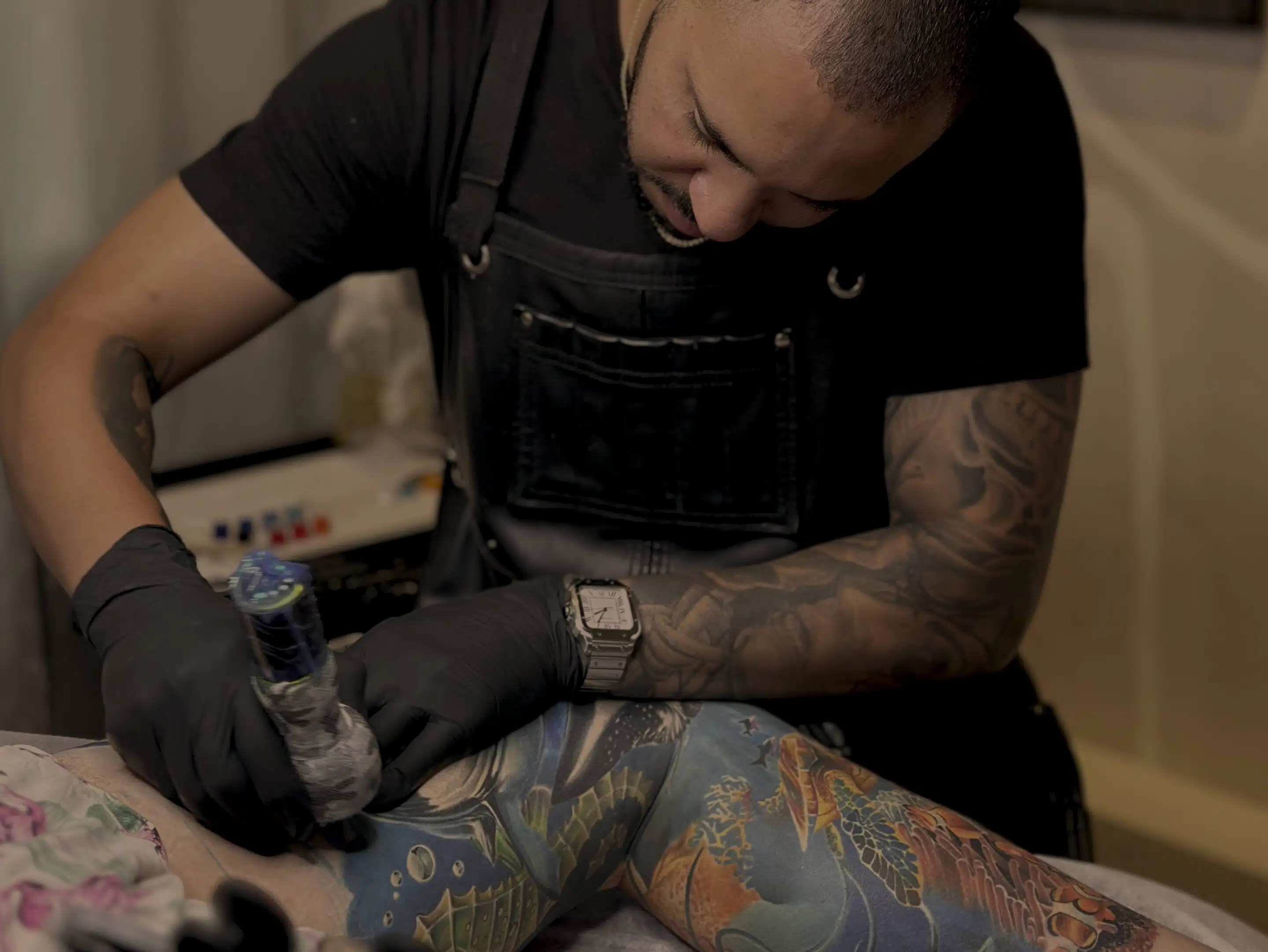
And when that tattoo is placed on the lower limbs (legs, calves, ankles, feet), scientific research shows that the body reacts differently compared to tattoos on the upper body. Circulation, swelling, and healing time are all affected.
In this article, I will explain the Washington Tattoo protocol for lower-limb tattoos, connecting each step to what the scientific literature says about wound healing, swelling control, and proper aftercare.
1. Why Do Lower-Limb Tattoos Require More Care?
The lower limbs are known in medicine for having a higher risk of edema (swelling) due to gravity and blood pooling. Research on wound healing in the legs consistently shows:
- Skin perfusion (blood flow to the tissue) directly affects healing speed less perfusion = slower healing;
- Venous return in the legs is naturally more challenging, which increases swelling and delays tissue repair;
- Managing edema is one of the most important clinical steps in healing any wound below the knee.
In simple terms:
A tattoo on the legs is a wound located in an area that naturally swells more and heals slower.
This does not mean there is a problem it means this area requires more care and the client must understand its biological behavior.
2. Step One: Using Second Skin (Medical Polyurethane Film)
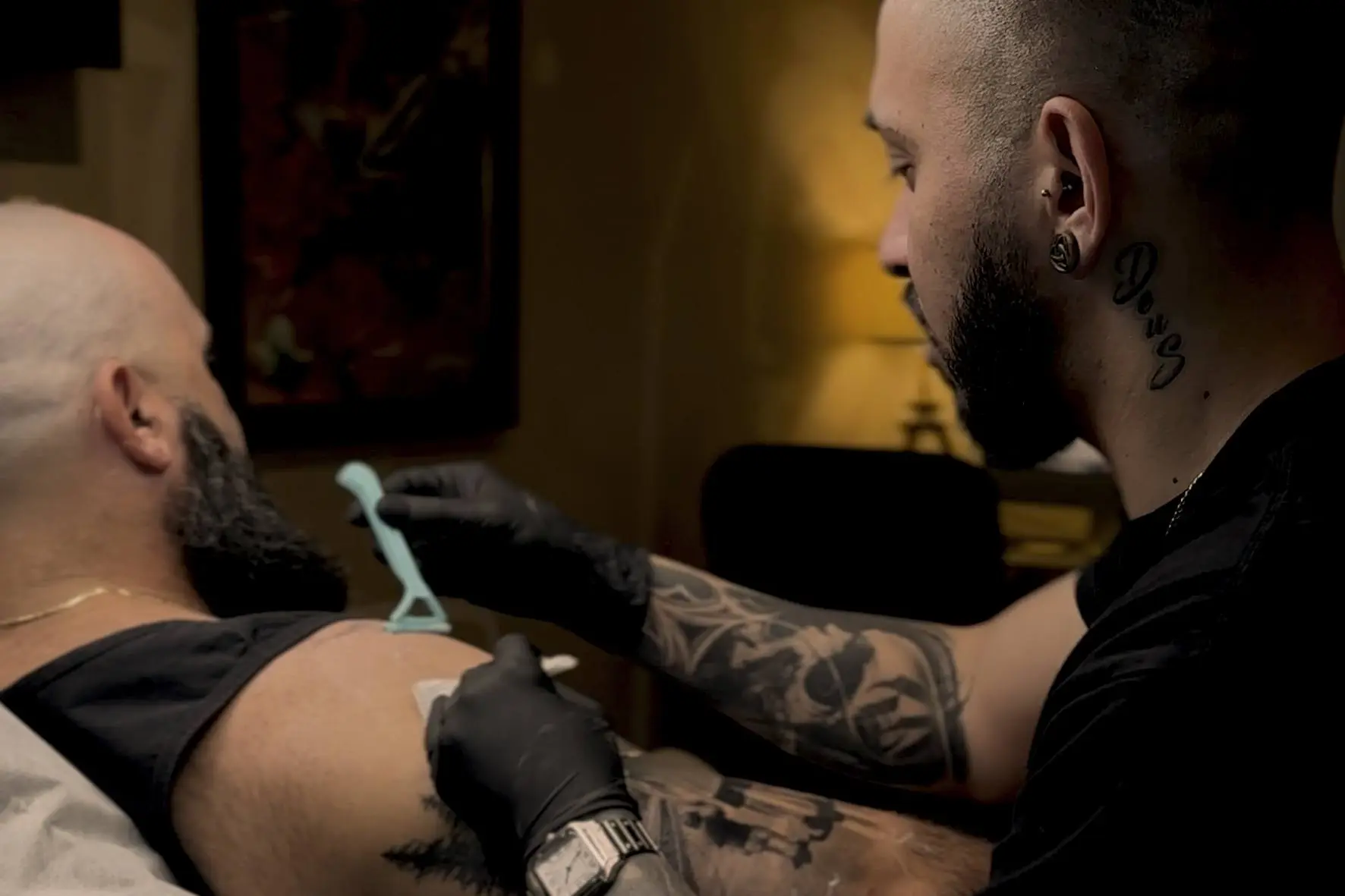
At Washington Tattoo, every tattoo on the legs or upper body receives a layer of Second Skin immediately after completion.
This is the same type of material used in medicine as a polyurethane film dressing for surgical wounds, grafts, abrasions, and acute injuries.
What does science say about polyurethane film dressings?
Studies show these dressings:
- create a moist, protected environment that speeds up epidermal regeneration and reduces scab formation;
- act as barriers against bacteria, friction, and contamination;
- are breathable (allow oxygen exchange), yet water-resistant, allowing normal showering;
In other words, Second Skin is a modern wound-care dressing backed by clinical evidence, adapted for tattoo healing. More and more dermatology studies and aftercare guidelines consider film dressings one of the safest methods when used properly.
Why keep it on for up to 5 days?
Medical guidelines state that polyurethane films can remain on the skin for several days as long as they are intact and comfortable.
For tattoos, many professional protocols recommend 3–5 days, because:
- the first 72–96 hours are the peak inflammatory phase;
- the skin is more vulnerable to contamination;
- friction and improper cleaning can damage the tattoo during this stage.
This is why we recommend 5 days unless the client experiences irritation, excessive fluid buildup, or an allergic reaction.
3. Removing Second Skin in the Shower: Reducing Mechanical Trauma
We instruct clients to remove the Second Skin only during a warm shower.
This is not only for comfort it is based on wound-care principles:
- water softens the adhesive;
- reduces traction on the new epidermis;
- prevents tiny surface tears (micro-lesions) around the tattoo.
On the lower limbs, where swelling may already increase surface tension, removing the dressing gently is even more important.
4. Proper Hygiene: Why Wash 3 Times a Day?
After removing the film dressing, the goal becomes managing bacteria and protecting the healing barrier.
Scientific guidance for acute wound care and tattoo aftercare recommends:
- washing with neutral, fragrance-free, hypoallergenic soap;
- avoiding harsh scrubbing;
- drying by gently patting with a clean towel or paper towel.
Clinical reviews emphasize that improper products and inadequate hygiene are among the top causes of tattoo complications (infection, irritation, dermatitis).
Washing around three times a day balances two important factors:
- controls bacteria and sweat
- prevents excessive dryness or irritation
This frequency is supported by wound-care guidelines and by studies showing that over-washing can disrupt the skin barrier.
5. Hydration: What Dermatology Studies Reveal
Once the tattoo is clean and dry, hydration becomes essential.
A clinical study evaluating dermo-cosmetic formulas on newly tattooed skin found that these products:
- reduced pain, itching, and burning within the first 7 days;
- accelerated restoration of the skin barrier;
- improved the overall comfort and appearance of the healing tattoo.
However:
- products with heavy fragrance, alcohol, or irritating preservatives increase the risk of dermatitis;
- extremely occlusive ointments can trap sweat and bacteria, causing folliculitis.
That’s why Washington Tattoo always recommends specialized tattoo aftercare creams, used 2–3 times per day in thin layers — enough to hydrate, but not enough to suffocate the skin.
6. Why Do the Legs Swell More? The Science Behind Elevation
Swelling in the legs is not just “normal” it is expected, due to basic human physiology.
Scientific research on edema, venous insufficiency, and post-surgical swelling shows that:
- the legs accumulate more fluid because of gravity;
- elevating the legs improves venous return and reduces edema;
- less swelling = better perfusion = better healing.
Because of this, we strongly recommend:
- resting with the legs elevated above the heart whenever possible
- avoiding long periods standing or sitting with feet down
- taking breaks during the day to reduce fluid pooling
Following these simple principles can dramatically reduce swelling, especially in large leg tattoos.
7. Using Ice: What Studies Say About Cryotherapy
One of the most common questions is: “Can I use ice on my tattoo?”
Decades of research on cryotherapy in acute injuries shows that:
- short applications (10–20 minutes) help reduce localized swelling, heat, and discomfort in soft-tissue injuries;
- ice temporarily decreases inflammation and provides analgesia;
- excessive or prolonged exposure to cold may hinder circulation.
Applied to tattoo healing:
Safe use of ice:
- never directly on the tattoo
- wrap ice in a clean plastic bag or cloth
- apply only for 5–10 minutes
- use mainly to reduce swelling in the first 48–72 hours
Avoid ice if:
- you have diabetes
- poor circulation
- peripheral arterial disease
- reduced sensation in the legs
When used correctly, ice can be a supportive tool not a mandatory one to manage swelling and discomfort.
8. “Every Person Heals Differently” This Is Scientific Fact
Many clients worry when their tattoo looks different from their friend’s.
But research clearly shows that wound healing varies dramatically based on:
- blood flow
- hydration levels
- smoking
- age
- medications
- immune system
- venous or lymphatic conditions
- overall health status
This is why two tattoos in the same area can heal completely differently on two people.
Comparison is not helpful, following proper aftercare is.
9. The Role of the Artist vs. the Role of the Client
Clinical studies on tattoo complications reveal that most problems occur after the client leaves the studio, due to:
- improper hygiene
- incorrect use of products
- exposure to sun, gym sweat, pools, or friction
- ignoring aftercare instructions
At the studio, the tattoo artist ensures:
- aseptic technique
- professional materials
- correct application of Second Skin
- evidence-based aftercare guidance
But once the client leaves, the healing process is their responsibility.
This is why education is part of our mission at Washington Tattoo, not just creating beautiful art, but ensuring that that art heals beautifully.
Conclusion: Science + Experience = Safer Healing for Lower-Limb Tattoos
Lower-limb tattoos can heal perfectly when the client understands three key points:
- A tattoo is a micro-surgery, and must be treated like one.
- The legs swell more and heal differently because of circulation and gravity.
- Following an evidence-based aftercare protocol is essential for long-term color retention and skin health.
At Washington Tattoo, we combine years of experience tattooing large-scale lower-limb pieces with scientifically supported wound-care principles to offer the safest healing possible.