
Almost every week someone messages me and starts with an apology.
“Sorry, I don’t really have a design yet.”
“I know what I want it to mean, but I don’t know what it should look like.”
Some of these people have been thinking about their tattoo for years. Not because they couldn’t afford it, and not because they didn’t want it. They waited because they believed they had to show up with everything figured out first. A finished drawing. The perfect reference. The exact size and placement.
If that sounds like you, I want to take that weight off your shoulders. You don’t need a finished idea to start a custom tattoo design. In this article I’ll explain why, what actually happens when you bring me an idea, and how you can prepare so we get the most out of your consultation.
Why so many people wait too long
A big tattoo is not a small decision. A sleeve, a leg piece or a back piece is something you will carry for the rest of your life, so it makes sense to be careful.
But I’ve noticed that what holds most people back is not the pain or the price. It’s the fear of not being understood. You have something important in your head, maybe a tribute to your family, maybe a chapter of your life you got through, and you’re worried that if you can’t explain it properly, the artist will just give you something generic.
So people keep searching Pinterest, saving hundreds of images, trying to build the design themselves before they feel ready to talk to someone.
The truth is, that part was never your job.
The idea is yours. The design is my job.
When you come to me, the most important thing you bring isn’t a picture. It’s the meaning. Who or what this tattoo is about. What you want to feel when you look at it in the mirror ten years from now.
I’ve had clients arrive with nothing more than a few lines of text written down. No image at all. Just words about what they wanted to carry. That was enough to start, because the meaning is the hardest part, and only the client can give me that.
Turning those words into a composition that works on skin is what I’ve spent my whole career learning to do.
Where that experience comes from
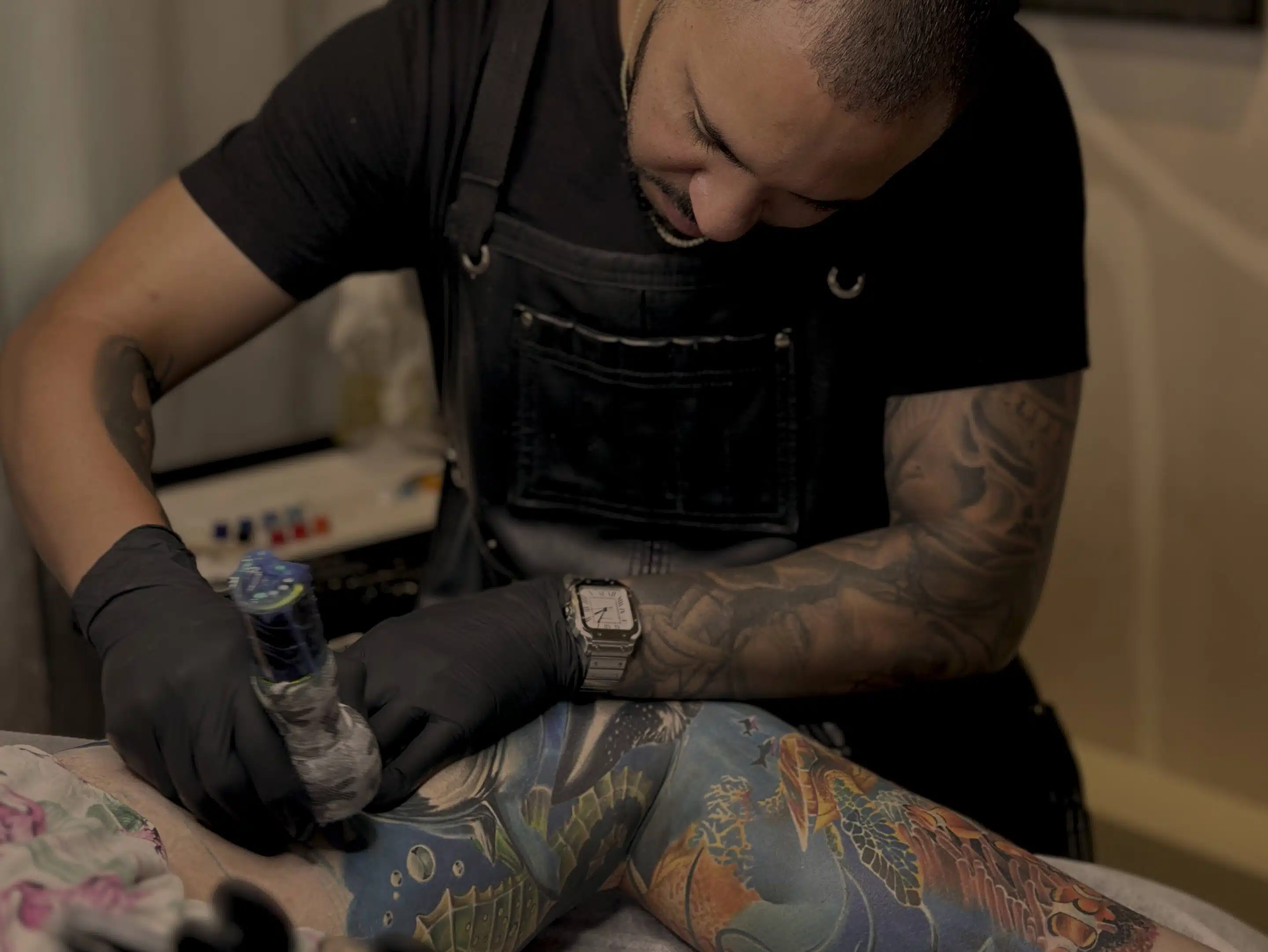
I started drawing and getting into tattooing at around 17, back in Brazil. I became a professional tattoo artist in my twenties, and I’ve now been tattooing professionally for more than 12 years, first in Brazil, then in Newcastle, and now in Sydney.
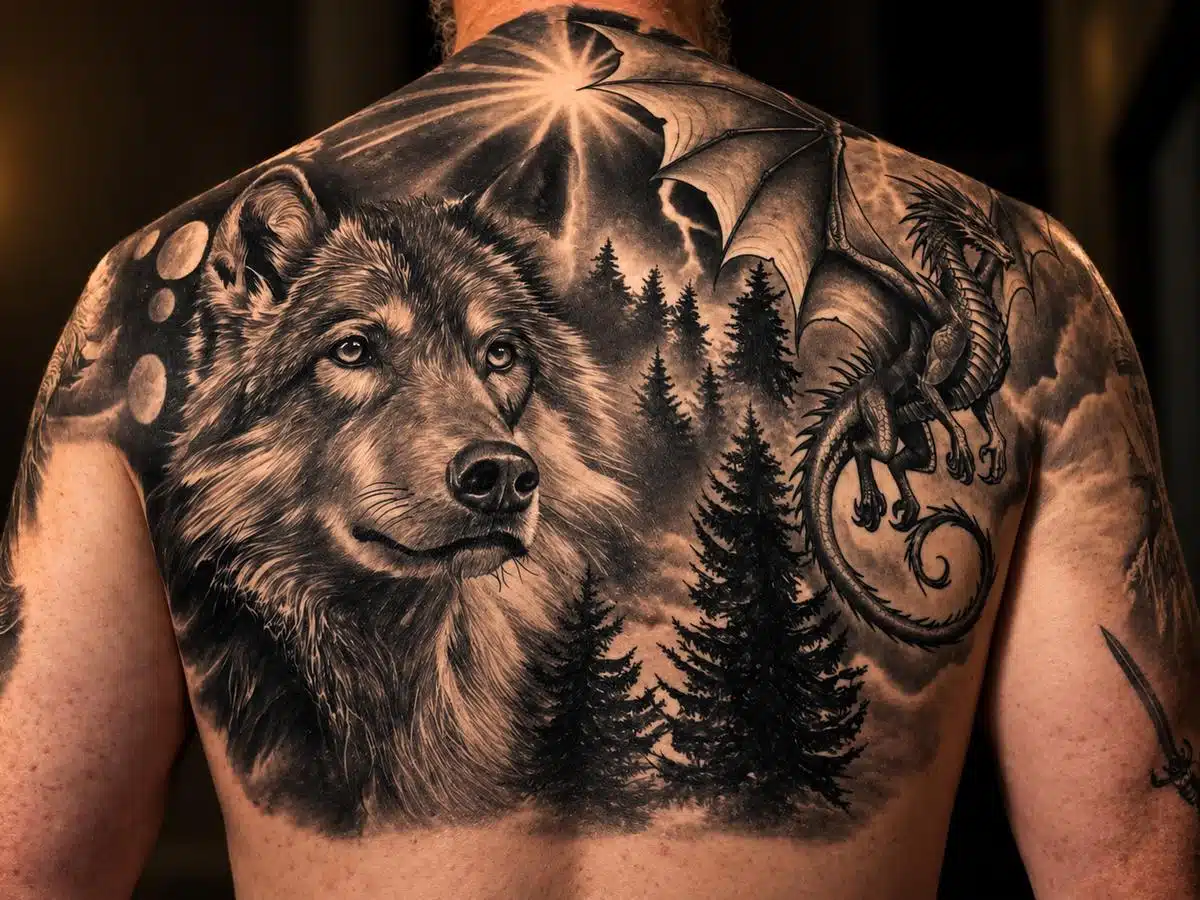
Over those years I worked across different styles before focusing completely on black and grey realism. I’ve competed at conventions, received awards in tattoo and realistic drawing categories, including at Tattoo Week Brazil, and I’ve taught tattoo workshops and art classes.
I’m also a painter. Working with acrylic on canvas trains my eye for light, shadow and contrast, and all of that goes straight back into the skin.
I’m not telling you this to show off. I’m telling you because when you hand someone the meaning of your tattoo, you should know who you’re handing it to.
A reference image is a starting point, not the finish line
If you do have references, bring them. They help me understand your taste, the mood you like, the subjects that speak to you.
But here’s something most people don’t know: a picture from the internet was never made for your body.
A photo on your phone is flat. Your arm, your leg and your back are not. A design that looks incredible on a screen can end up looking crowded, flat or lost once it’s on skin. A few things I always look at:
- Scale. Tiny details that look sharp on a screen can’t always fit in a small area. Skin is not paper, and detail needs room to stay readable over time.
- Contrast. Black and grey realism lives on the balance between dark and light. Without enough contrast, a tattoo can look great on day one and lose its impact as it heals and ages.
- Focal point. Every strong composition has one main element the eye goes to first. If everything is fighting for attention, nothing stands out.
- Longevity. I’m always thinking about how the tattoo will look in five, ten, twenty years, not only on the day you leave the studio.
So even when someone arrives with a design they think is finished, I usually rework it. Not to change their idea, but to make it work on the body.
Your body is part of the custom tattoo design
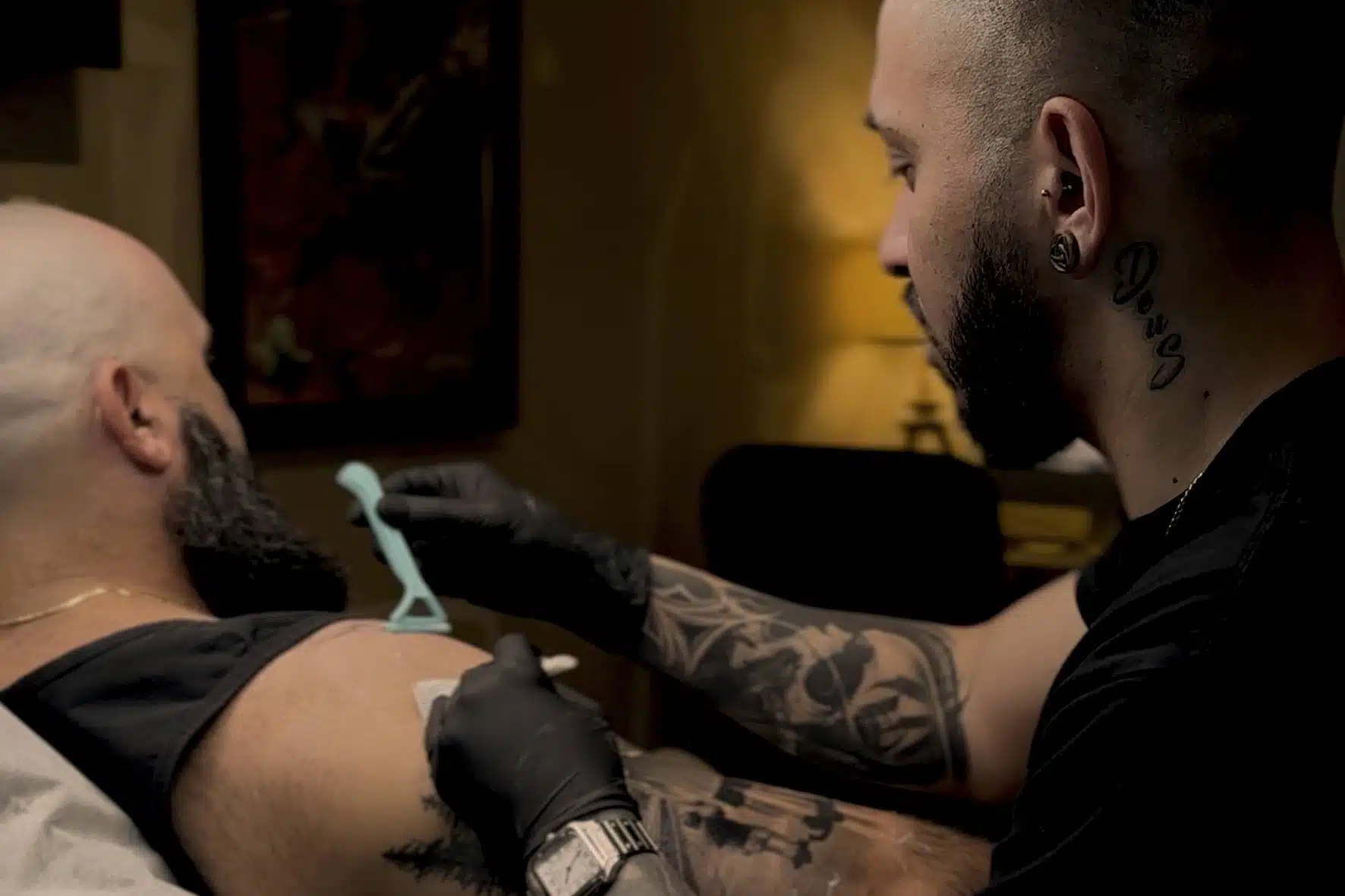
This is the part I care about most. A tattoo is not a sticker. Your body has curves, muscles and movement, and the design should follow them.
When I build a composition, I’m looking at how the main elements sit on the muscles, how the piece reads from different angles, where the negative space should breathe and how one element flows into the next. On a sleeve, for example, the design has to work when your arm is relaxed, when it moves and when someone sees it from the side.

That’s why I don’t treat a design as finished until it’s been fitted to the actual body it’s going on. If you want to go deeper into this, I wrote a full article about tattoo positioning and anatomy.
What happens when you bring me an idea
Most of the first conversation isn’t about drawing. It’s about you. I want to understand:
- What the tattoo means to you
- Which elements matter most, and which ones you’re flexible on
- Where you want it, and how big you’re thinking
- Whether this is a single piece or part of something bigger later
- Any existing tattoos that need to work with the new piece
From there, I build the composition around your body and we refine it together. You bring the meaning, I bring the direction, and the final design comes from both.
The best projects I’ve done started exactly like this. Someone trusted me with the meaning, and we built the artwork from there.
Sometimes I’ll say no
If something you want won’t look good on the body, won’t fit the space or won’t age well, I’ll tell you. Honestly and respectfully.
Not to take control away from you, but because you’re the one who will carry this tattoo for the rest of your life. I’d rather have an honest conversation at the start than see you disappointed in five years.
Usually, when I explain why something won’t work, we find a better solution together, and the final piece ends up stronger than the first idea.
How to prepare your idea before a consultation
You don’t need a finished design, but a bit of thinking beforehand helps a lot. Here are the questions I’d suggest answering for yourself. Write them down on your phone, even in a few words:
- What is this tattoo about? A person, a value, a moment, a chapter of your life, or simply something you find beautiful. All of these are valid.
- How do you want to feel when you look at it? Strong, calm, proud, protected. This helps me choose the mood and the contrast.
- Is there one element you can’t live without? A lion, an angel, a portrait, a symbol. Tell me the non-negotiables.
- Where on your body? If you’re not sure, that’s fine. We can decide together based on the size and the composition.
- Is this one piece or the start of something bigger? Planning a sleeve from the beginning is very different from adding pieces one by one.
- What do you NOT want? Sometimes this is the most useful answer of all.
- Do you have a few references you like? Five good references are more useful than two hundred saved images.
Save this list and use it whenever you’re ready, with me or with any artist you trust. If you’re getting your first big piece, you might also find this useful: 10 things to know before getting a tattoo.
What you don’t need to bring
- A finished drawing
- The right tattoo terms
- A perfect reference
- Total certainty about size or placement
Nobody should feel embarrassed for asking questions or for not knowing how tattooing works. That’s what the consultation is for.
You’re not the only one waiting
Right now, more than 260 people are on my VIP List. Many of them came to me the same way you might be thinking about it: with a loose idea, something important behind it, and the patience to wait for the right artist.
If you have a question about your own idea, leave it in the comments. Chances are someone else is wondering the same thing, and I’m happy to answer.
Where to start
If you’ve been holding back because your idea isn’t “ready”, that’s okay. You don’t need the words. You just need to know what matters to you.
My books are currently closed. People on my VIP List get first access when new consultation spots open. If you have an idea waiting, that’s the best place to start.
Washington Gomes
Black & Grey Realism · Tattooing at SELECT INK, Redfern, Sydney