A memorial tattoo is never just a tattoo. It is a way to keep someone close when you cannot hold them anymore. Maybe it is a parent, a grandparent, a friend or a dog who stayed by your side for years. Still, whoever it is, the feeling is the same. You want them with you, every day, in a way that feels real.
Over the years, many people have sat in my chair with tears in their eyes while we talked about the person or pet behind their idea. Honestly, these sessions stay with me. In this article, I want to help you plan a memorial tattoo with care. I will talk about the emotions, the photos you need, the design choices and what the day can feel like.
Quick answer: A good memorial tattoo starts with the story, not the image. Choose a clear, sharp photo, give the design enough size for realistic detail, and pick a placement that feels right for how private or public you want the memory to be. Then choose an artist who specialises in portraits and treats your story with respect.
Why people choose a memorial tattoo
Grief is hard to explain. Sometimes it is quiet. Other days it hits you out of nowhere. Because of that, for many people, a memorial tattoo becomes a way to give that grief a place to live.
Here are some of the reasons clients share with me:
- They want to feel close to the person every day, even when life gets busy.
- A visible memorial tattoo starts conversations about someone they love.
- The tattoo marks the end of a hard chapter and the start of healing.
- It honours a pet who was family.
- They want a permanent reminder of a lesson that person taught them.
However, none of these reasons is better than another. In fact, most people feel a mix of all of them. What matters is that the tattoo means something deep to you.
The emotions you might feel during the process
Let me be honest. Planning a memorial tattoo can bring up a lot of feelings. First, you will look at old photos. You might remember things you have not thought about in years. Also, you might feel guilty for being excited about a tattoo connected to loss.
Of course, all of that is normal. Excitement and grief can live together. Feeling happy about the tattoo does not mean you miss the person less. Instead, it means you found a beautiful way to carry them.
During the session, some clients talk a lot about their person. Others go quiet. Some cry, and some laugh at old memories. Whatever happens, it is okay. I always try to create a calm space where you can feel whatever you feel.
Choosing the right photo for a memorial tattoo
Above all, the photo is the heart of a portrait memorial tattoo. In realism, I can only tattoo what I can see. So the quality of the photo makes a huge difference to the result.
Here is what makes a strong reference photo:
- Sharp focus. Blurry eyes lead to blurry details.
- Good light. Clear shadows and highlights help create depth in black and grey.
- Big enough. A small face cropped from a group photo often loses detail.
- The right expression. Choose a face that feels like them, not only a technically perfect photo.
- Few filters. Heavy filters change skin and fur texture.
If you only have older or lower quality photos, don’t panic. Instead, bring what you have. Sometimes we can combine elements from different photos. However, I will always tell you honestly what is possible, because I want the tattoo to look like them.
Memorial tattoo for a pet
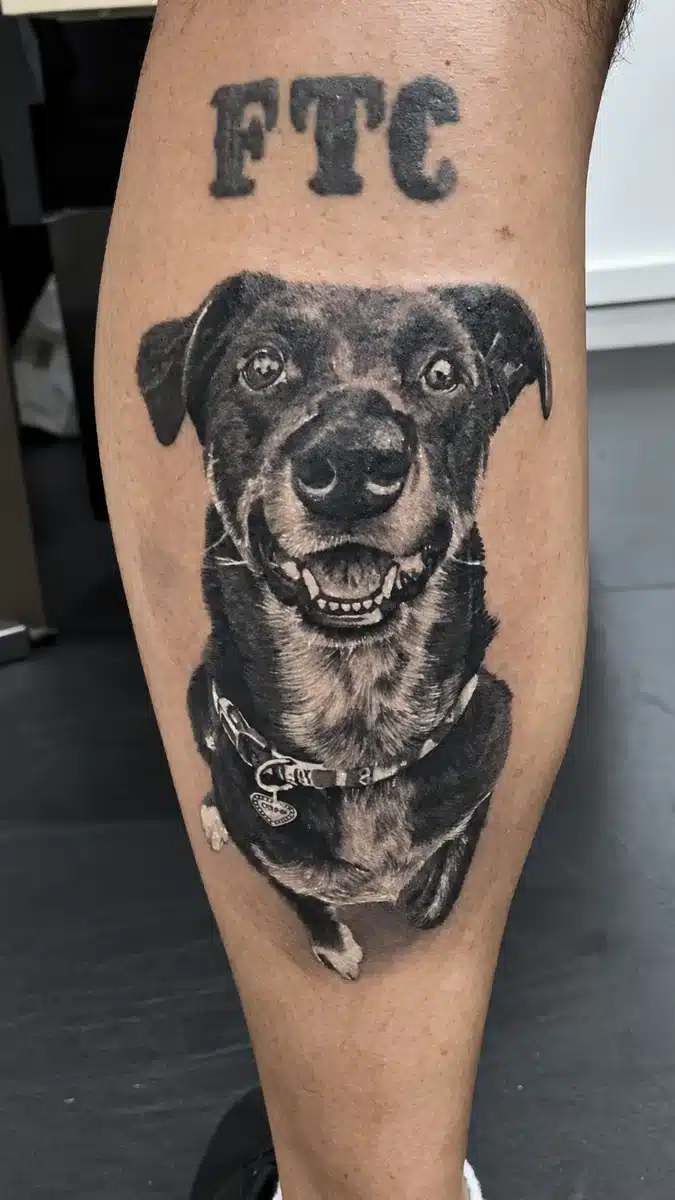
For many of us, pets are family. Anyone who has lost a dog or cat knows that grief can feel as heavy as losing a person. That is why pet portraits are some of the most emotional tattoos I make.
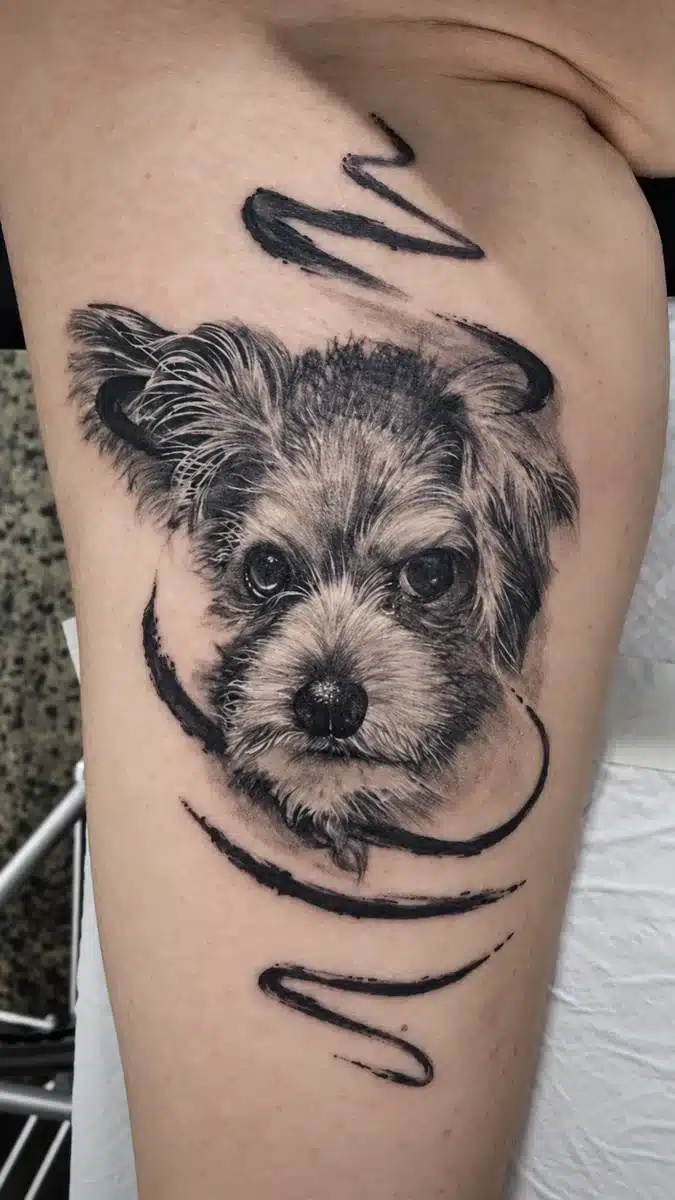
With pets, the eyes and the fur especially tell the story. The direction of the fur, the shine in the eyes and the little details around the nose make the animal feel alive. A great pet memorial tattoo should make you smile when you look at it, not only cry.
You can also add small elements that carry a memory. For example, a date, a paw print, a favourite place or a scene like a walk on the beach. Just keep the design balanced, so the main portrait stays clear. You can see more examples on my dog portrait tattoos page.
Memorial tattoo for a person
On the other hand, a portrait of a person is one of the hardest things to tattoo. Our brains know human faces very well. So even a small mistake in the eyes or mouth can make the portrait feel wrong.
This is why size matters so much. A face needs space for the eyes, the shadows and the small details that create likeness. If the portrait is too small, those details blur together over the years. Usually, I recommend a size that gives the face room to breathe.
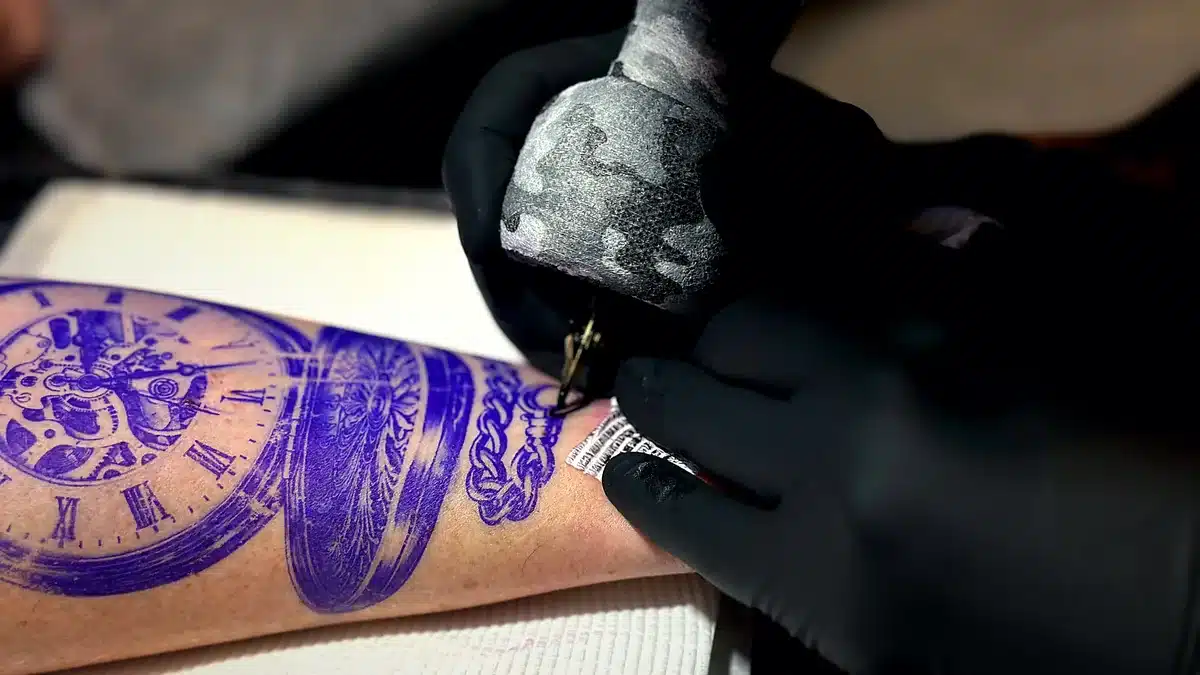
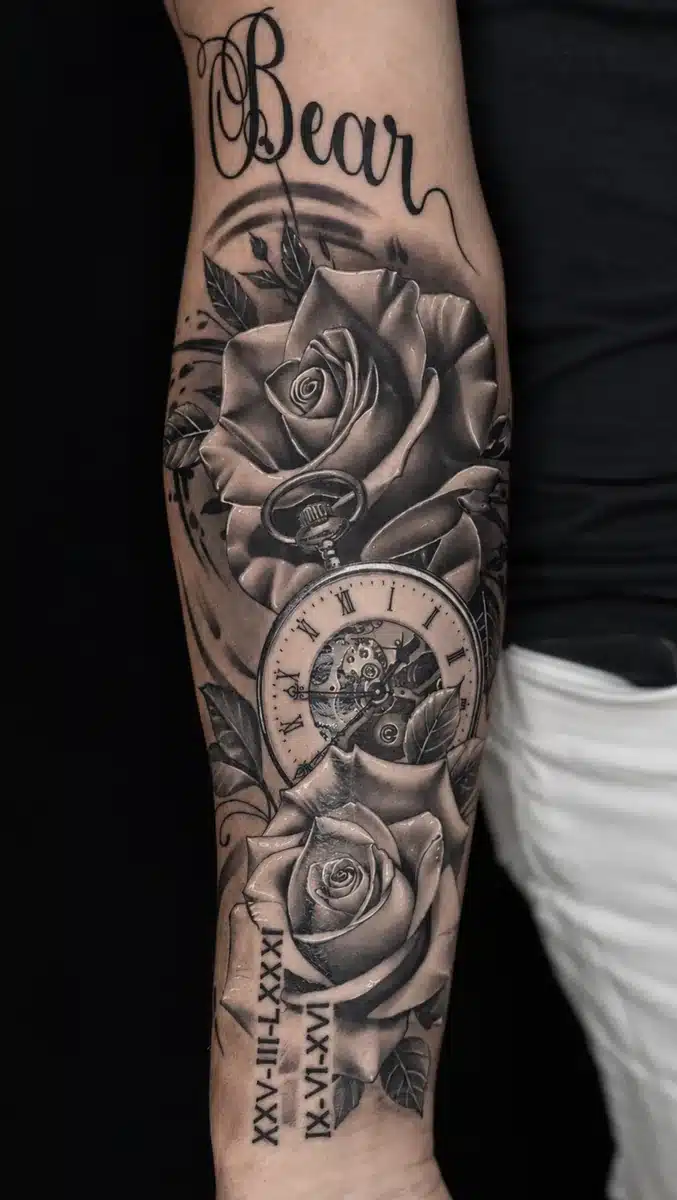
Some people prefer not to tattoo a face. Instead, they choose symbols. For example, a clock showing a time of birth or passing, a rose, a name in beautiful lettering, or an object that belonged to the person. These ideas can be just as powerful. If you want to learn more, read my guide on getting the perfect portrait tattoo.
Symbols and details in a memorial tattoo
In addition, symbols can add meaning without making the design busy. Here are some ideas clients often choose:
- Clocks with a meaningful time
- Roses or flowers that the person loved
- Names, dates or a short phrase
- Religious symbols, like angels, rosaries or crosses
- Places, like a beach, a house or a mountain
The secret is to choose one or two symbols that really mean something. Too many elements can make a tattoo feel crowded. In realism, space and contrast are what make each detail readable.
How long does a memorial tattoo take?
Every project is different. A small symbol can take one session. In contrast, a detailed realistic portrait with a background often needs more than one session. That is not a bad thing. Realism needs time for smooth shading and strong contrast, and rushing a tribute never makes sense.
So when you plan, think about time as part of the respect you give the memory. When I plan a memorial tattoo, I would rather take an extra session than lose a detail that makes the face feel like them.
Placement for a memorial tattoo
Next, where you place a memorial tattoo depends on how you want to live with it. Some people want to see it every day. So they choose the forearm, where they can look down and feel close to their person. Others want it more private, like on the chest over the heart, the back or the upper arm.
Ask yourself a few questions:
- Do I want to see this every day?
- Am I comfortable explaining it to strangers?
- Does this spot have enough space for the detail?
- Could I add to this piece in the future?
Overall, there is no wrong answer. However, the placement should support the design. For example, a portrait looks best on a flat area with enough space, like the outer forearm, calf or upper arm.
What the tattoo day feels like
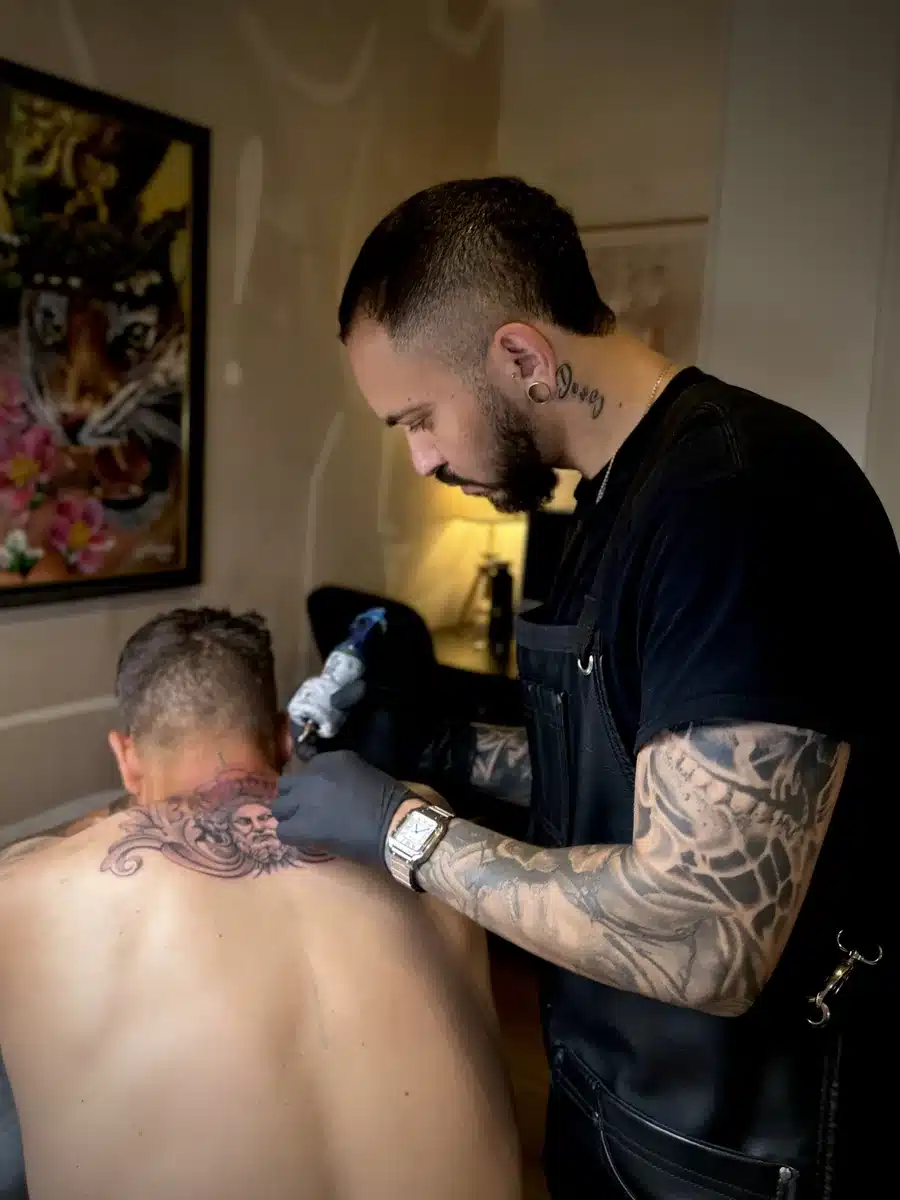
On the day, I show you the design before we start. We look at it together, and we adjust size and position on your skin until it feels right. This part matters a lot for a memorial tattoo, because you need to feel that it really looks like them.
Then we start. For example, some clients bring a photo to hold. Some bring a playlist the person loved. Others just want quiet. During long sessions, we take breaks. I always want you to feel safe and respected, because this is not a normal tattoo. It is a tribute.
Aftercare after the session
A memorial tattoo deserves great aftercare. After all, you want those fine details to heal well. So follow your artist’s instructions closely, keep the tattoo clean, and protect it from the sun.
If you want to understand the first days better, read my guide on the first day of care with second skin. For general health information about tattoos, Healthdirect has a helpful page about body piercing and tattoos.
FAQ about memorial tattoos
A good memorial tattoo has a clear meaning, a sharp reference photo, enough size for detail and an artist who specialises in realism. The story should guide every choice.
Often, yes. Bring the best photo you have. A specialist can tell you honestly how much detail is possible.
It depends on the design and placement. In general, faces need enough space for the eyes and shadows to stay clear as the skin ages.
Yes, completely normal. Many people feel strong emotions during a memorial session. A good artist will give you space and time.
Carry them with you
In the end, a memorial tattoo is love made visible. It keeps a voice, a face or a loyal friend close to you, every single day. So take your time with it. Choose the photo with care, think about the placement, and work with an artist who respects your story.
If you are thinking about a tribute piece, take a look at my portrait tattoos. Bookings are closed right now, but the VIP List hears first when new dates open. And if you want to share who your memorial tattoo would honour, leave a comment. I read every one.
Washington