“What if I regret it?” Almost every person asks me this before a big tattoo. Some ask it out loud. Others ask it with their eyes. Tattoo regret is one of the deepest fears people carry, and honestly, it makes sense. You are about to make a permanent choice, and nobody wants to look in the mirror one day and feel a knot in their stomach.
In this article, I want to talk openly about that fear. I will explain where tattoo regret really comes from, the signs that you are ready, and what you can do before the first line to protect yourself. My goal is not to push you into a tattoo. Instead, I want you to make a calm decision you will feel proud of for many years.
Quick answer: Most tattoo regret does not come from the tattoo itself. It comes from rushing, choosing only by price, poor placement, low quality, or a design that did not fit the person. With time, planning and the right artist, you lower the risk of regret a lot.
Why the fear of tattoo regret feels so heavy
Let’s start with the feeling. Fear of regret is not really about ink. It is about identity. You ask yourself: “Will I still be this person in ten years? Will this still mean something to me?”
On top of that, you may hear stories. A friend hates an old tattoo. A cousin keeps a sleeve covered at work. Social media shows laser removal videos. So the fear grows, even if your idea is beautiful and meaningful.
Here is what I want you to know. Feeling this fear does not mean you should not get the tattoo. Often, it means you respect the decision. And people who respect the decision usually plan better. As a result, they regret less.
Where tattoo regret really comes from
Over more than 12 years of tattooing, I have listened to many people talk about tattoos they did not love. When you hear enough of those stories, a pattern appears. The regret almost never comes from the idea alone. Instead, it comes from how the tattoo was made.
These are the most common causes I hear:
- Rushing. The person decided on Friday and got tattooed on Saturday.
- Choosing only by price. They picked the cheapest option and paid for it later.
- Bad placement. The design did not follow the body, so it looked stuck on.
- Too small for the detail. Fine details blurred together after a few years.
- Following a trend. The design meant something to the internet, not to them.
- Wrong artist for the style. A great artist in one style is not always great in realism.
Notice something here. You can prevent every single cause before the tattoo starts. In other words, most tattoo regret is a planning problem, not an ink problem.
The emotional side of tattoo regret
Sometimes regret is not technical. It is emotional. For example, a person tattoos a partner’s name, and the relationship ends. Or someone makes a tattoo during a hard moment and later wants to move on from that chapter.
I never judge these stories. Life changes, and people change. However, there is a simple question that helps a lot: “Is this tattoo about a moment, or about who I am?”
Tattoos about values, strength, faith, family or a turning point you survived tend to age well emotionally. They grow with you. In contrast, tattoos made only to impress someone else often lose their meaning faster. So before you start, ask yourself what the tattoo will mean to you on a bad day, not only on a good one. That one question prevents a lot of tattoo regret.
Signs you are ready and tattoo regret is unlikely
You might be wondering how to know if you are truly ready. Here are some good signs:
- The idea has lived in your head for months, not days.
- The meaning still feels strong after time passes.
- Explaining why you want it takes only one or two sentences.
- Your artist was chosen for their work, not their price.
- Excitement is bigger than pressure.
If most of these feel true, you are in a strong place. In my experience, clients who wait and plan rarely talk about tattoo regret later. Instead, they talk about the next piece.
How planning protects you from regret
Planning is the quiet hero of every good tattoo. It is not exciting to talk about, but it changes everything. Before I tattoo anyone, I think about size, placement, contrast and flow.
For example, I check how the design moves when you bend your arm or turn your body. I check if the main subject has enough space to keep its detail. Also, I think about future tattoos, because a first piece can block a future sleeve if we place it badly.
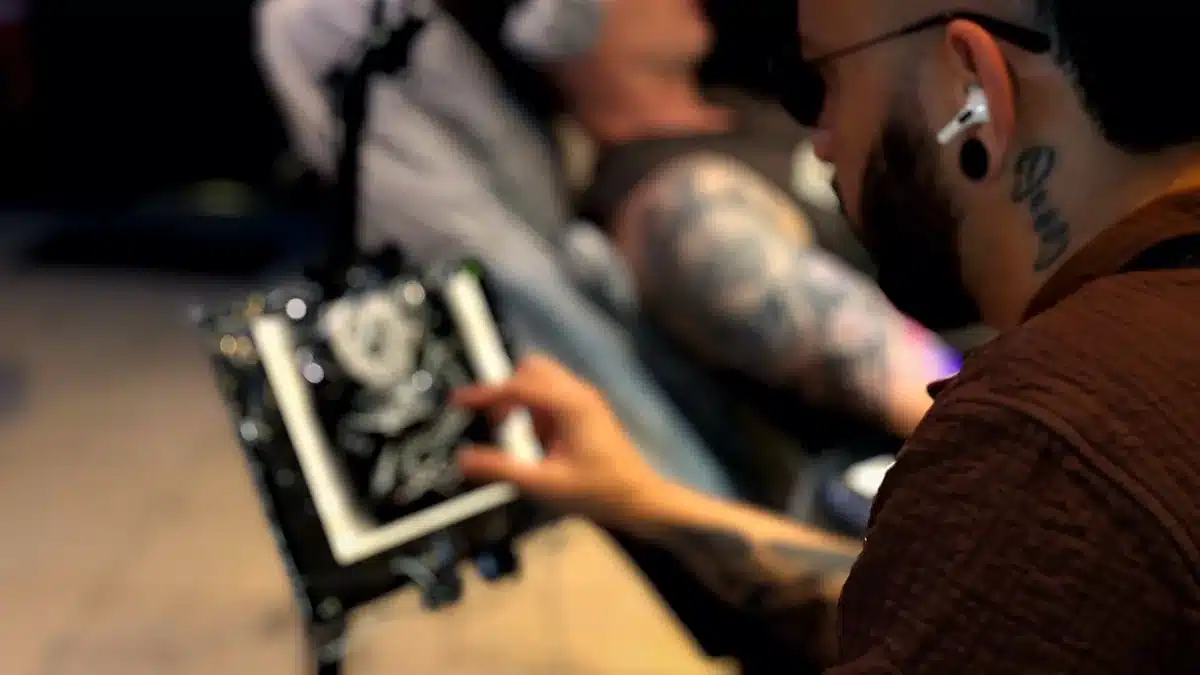
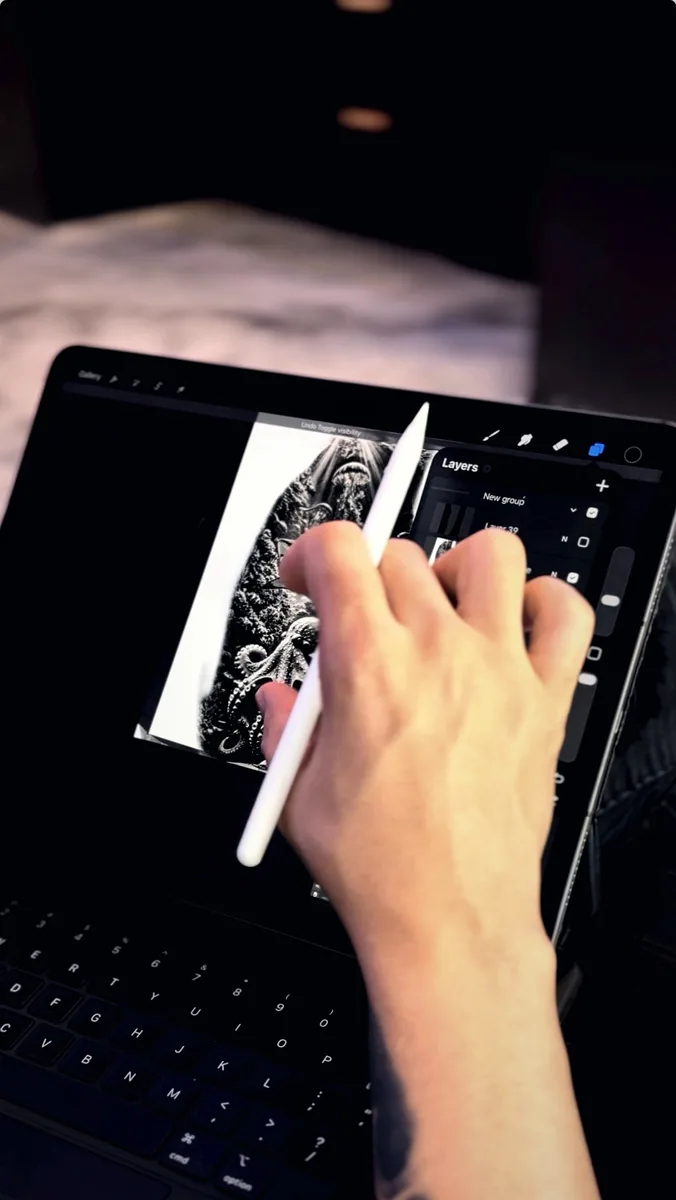
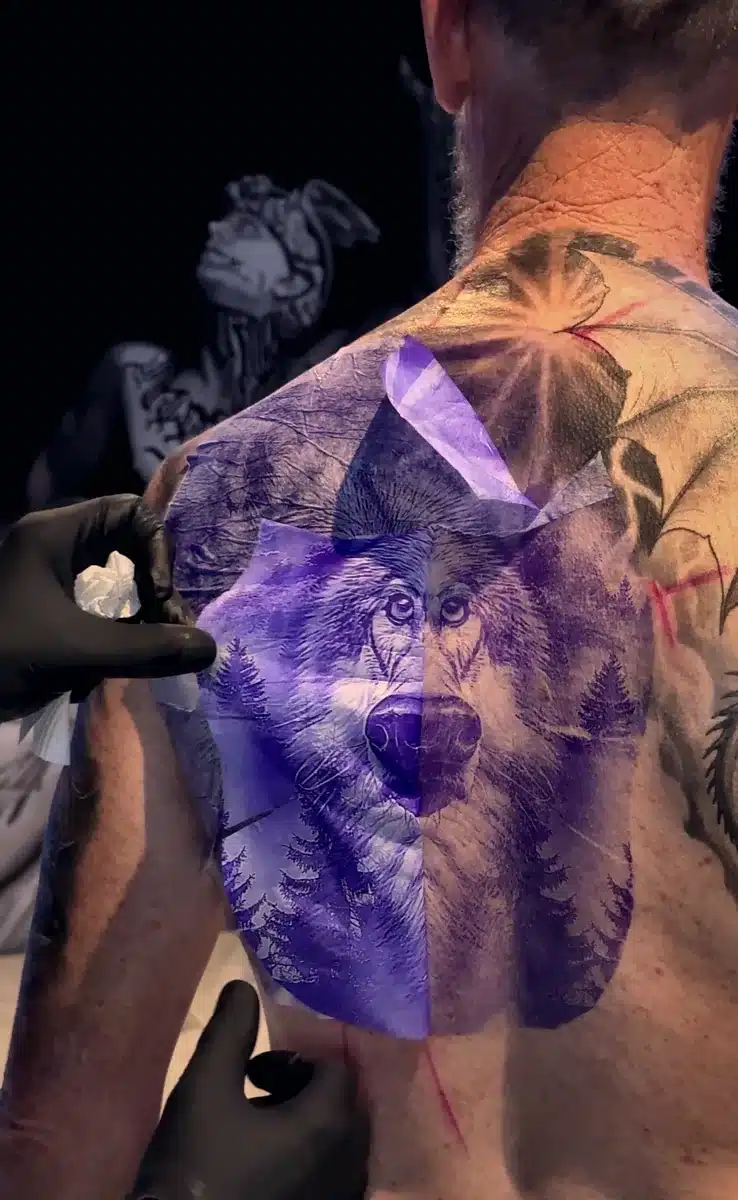
This is why I build the design around your body. I prepare it before the session, and we look at it together on the tattoo day, before the first line. Then we adjust size and position right there, on your skin. That moment removes a lot of fear, because you see it before it becomes permanent.
Placement: the hidden cause of tattoo regret
Many people focus only on the design. However, placement can make or break a tattoo. A great design in the wrong spot can look flat, distorted or awkward.
Think about these questions with your artist:
- Do you want to show it every day, or keep it more private?
- Does your job have rules about visible tattoos?
- Will this spot leave room for future work?
- Does the shape of the design match the shape of the muscle?
I wrote a full guide about tattoo positioning and anatomy if you want to go deeper. In short, the right placement makes a tattoo feel like it was always part of you.
Quality is your best insurance against tattoo regret
Here is a hard truth. A cheap tattoo is often the most expensive one. Many people who live with tattoo regret did not dislike the idea. Instead, they disliked the execution.
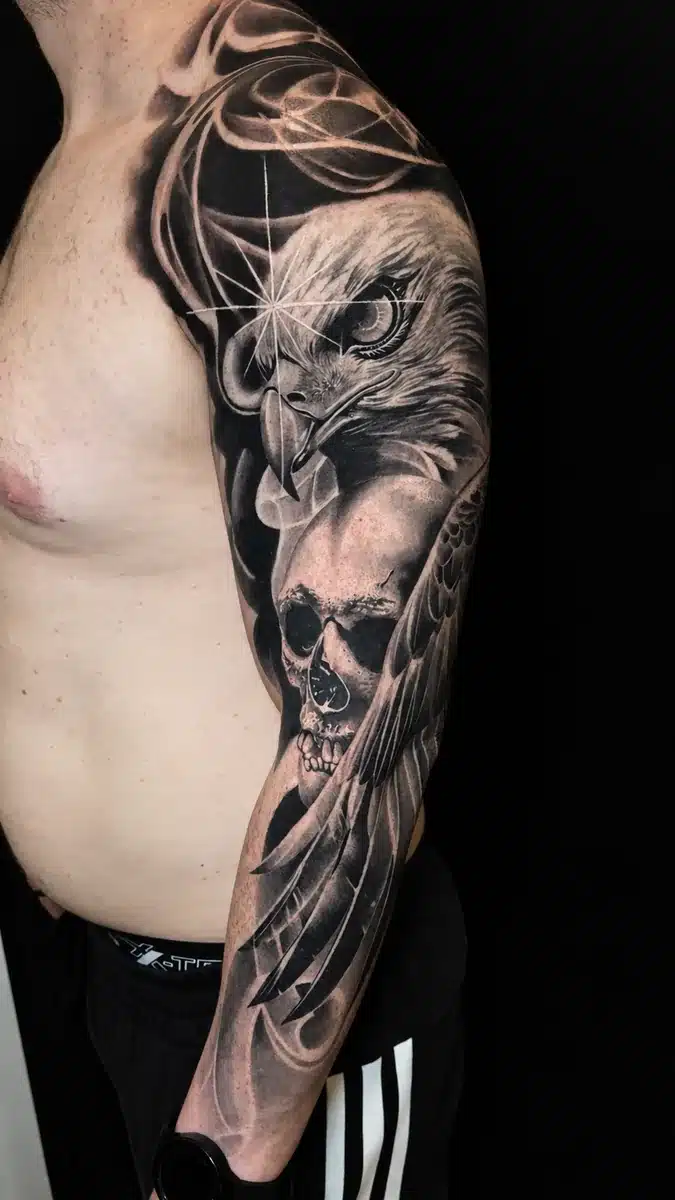
In black and grey realism, quality shows in contrast, smooth shading and clean highlights. Those details keep the tattoo readable as the skin ages. Without them, a tattoo can look grey and muddy after a few years. You can read more about this in my article on why some tattoos fade more than others.
So when you compare artists, look at healed work. Fresh photos always look good. Healed photos tell the real story.
How your artist should talk about tattoo regret
A good artist does not ignore your fear. Instead, they talk about it openly. When a client tells me they are scared of tattoo regret, I don’t laugh it off. I ask questions. What exactly worries you? Is it the size, the spot, the meaning or the pain?
Once we name the fear, we can solve it. Sometimes we make the design bigger so the detail lasts. Other times we move it to a spot that is easier to hide at work. And sometimes, we simply wait. I would rather lose a booking than give someone a tattoo they are not ready for.
What if you already have tattoo regret?
Maybe you are reading this with an old tattoo you do not love. First, take a breath. You are not alone, and it does not make you foolish. Most of us made choices in the past that we would make differently today.
There are different paths, and each one depends on the tattoo and your skin. Some people choose laser removal. Some people decide to live with the old piece as part of their story. Please speak with a qualified professional about your options before you decide anything. Healthdirect also has clear, general information about tattoos and body piercing, including health risks to think about.
Right now, I do not offer cover-up tattoos. Still, I always encourage people to get honest advice from someone who specialises in that work.
A simple exercise before you commit
Try this exercise tonight. Write your tattoo idea on a piece of paper. Under it, write three things:
- Why do I want this?
- How do I want to feel when I see it?
- Will this still matter to me in ten years?
Put the paper away for two weeks. Then read it again. If the answers still feel true, that is a great sign. On the other hand, if they feel weak, your idea may need more time. There is no rush. A good tattoo waits for you.
FAQ about tattoo regret
Some people regret a tattoo, but many never do. In my experience, regret is much less common when people plan, take their time and choose a specialist.
People often regret rushed tattoos, names of partners, trend designs and small pieces with too much detail. Low quality work also causes a lot of regret.
There is no exact rule. However, if an idea still feels right after several months, that is a strong sign it means something real to you.
Yes. A good artist guides size, placement and design, and will tell you honestly when an idea will not work on skin.
Your tattoo should feel like home
Fear of tattoo regret is natural, and talking about it is healthy. It shows that you care about your body and your story. So use that fear wisely. Plan, wait, ask questions and choose an artist you trust.
If you want to learn more before you decide, read my 10 things to know before getting a tattoo. And if you have a question about regret, leave a comment below. I read every one.
Washington