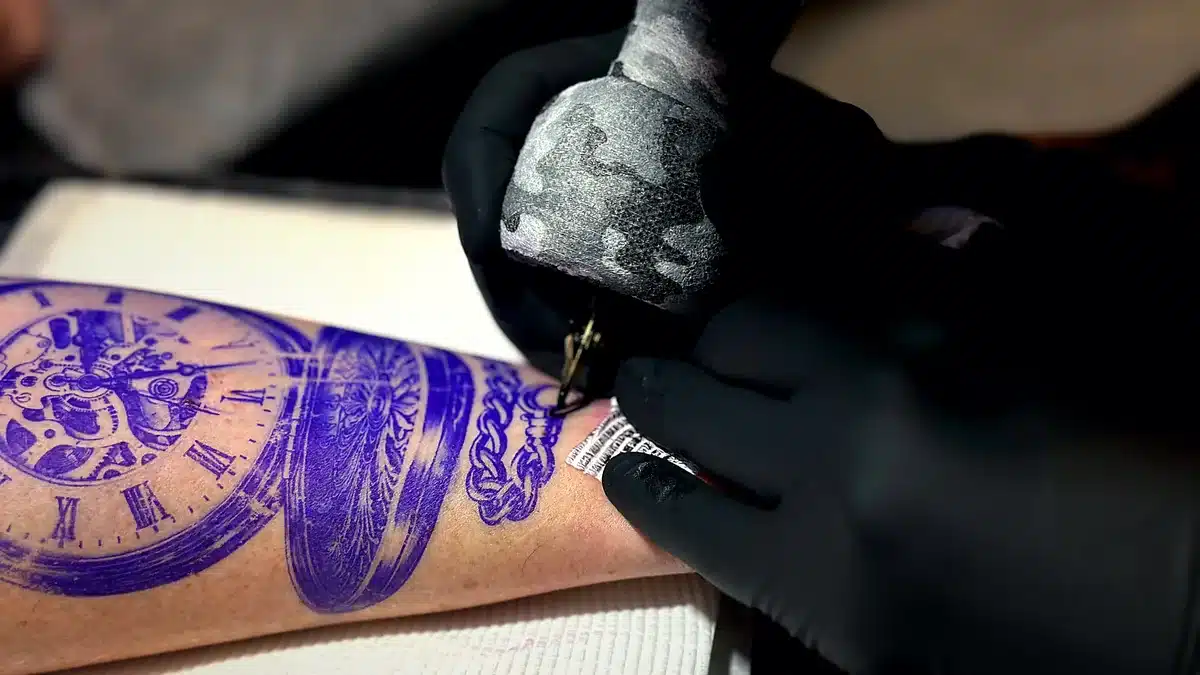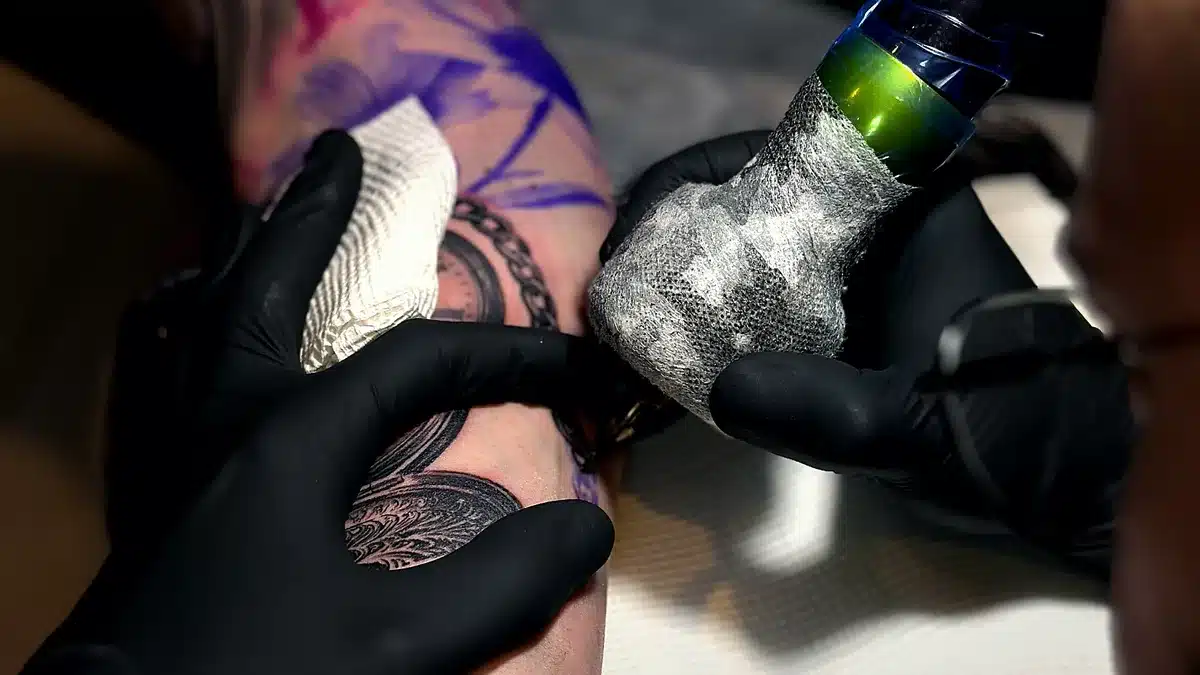
“Will it still look good in a few years?” This is one of the questions I hear the most. And I understand why. Black and grey tattoo aging is a real worry, because nobody wants to pay for a beautiful piece and then watch it turn into a grey shadow. You want a tattoo that looks impressive today and still makes you proud for a long time.
In this article, I will show you what black and grey tattoo aging really looks like, using real healed photos of my work after one year. Then I will explain what changes in the skin, why some tattoos lose their impact faster, and what you and your artist can do to protect your tattoo.
Quick answer: Every tattoo softens as the skin heals and ages. However, black and grey tattoo aging depends a lot on contrast, size, placement, technique and aftercare. Strong darks, clean highlights and enough space for detail help a realism tattoo stay readable for years.
Why people fear black and grey tattoo aging
Let’s talk about the emotion first. When you invest in a big tattoo, you are not only buying art. You are investing time, money, pain and trust. So the idea that it might fade feels like losing all of that.
Many people have seen old tattoos that look blurry or green. Maybe a parent or an uncle has one. Because of that, they imagine their tattoo will look the same one day. That fear is real, and it deserves an honest answer.
Here is the truth about black and grey tattoo aging. Tattoos do change. Skin is alive. However, the way a tattoo ages is not random. A lot of it depends on choices made before and during the session.
What happens to a tattoo when it heals
Right after a session, a tattoo looks very bold. The skin is red, and the ink sits close to the surface. Everything feels sharp and dark.
Then the skin starts to heal. Over the first weeks, it peels and settles. A thin layer of new skin forms over the ink. As a result, the tattoo looks a little softer than on day one. This is normal, and it happens to every tattoo.
After that, the slow part of black and grey tattoo aging begins. Over months and years, the body moves a small amount of ink. Sun also breaks down pigment. Lines spread very slightly. That is why the original design and technique matter so much.
Real black and grey tattoo aging after one year
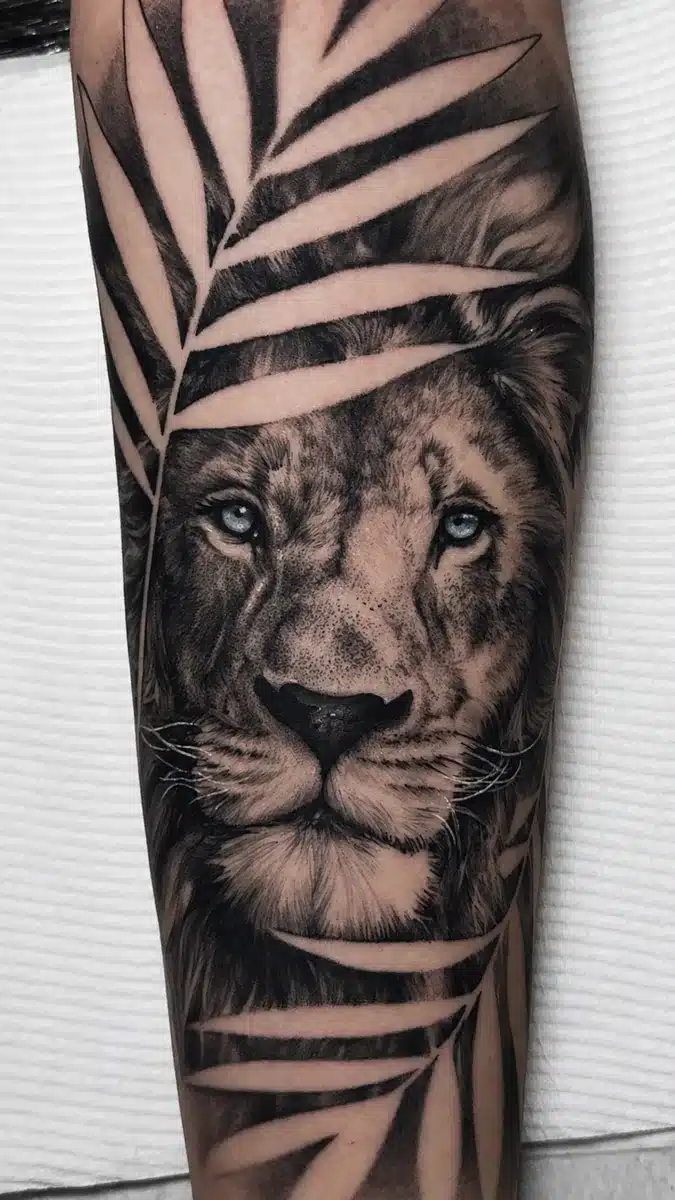
I want to show you real results, not only theory. The photos in this article include two pieces healed for one year. Look at the contrast. Look at how the dark areas still stay dark and how the light areas still feel clean.
One year is not forever, of course. Still, it shows how a tattoo settles after healing. If a tattoo looks muddy at one year, it rarely improves later. In contrast, a tattoo that keeps strong contrast after one year usually has a good base for the future.
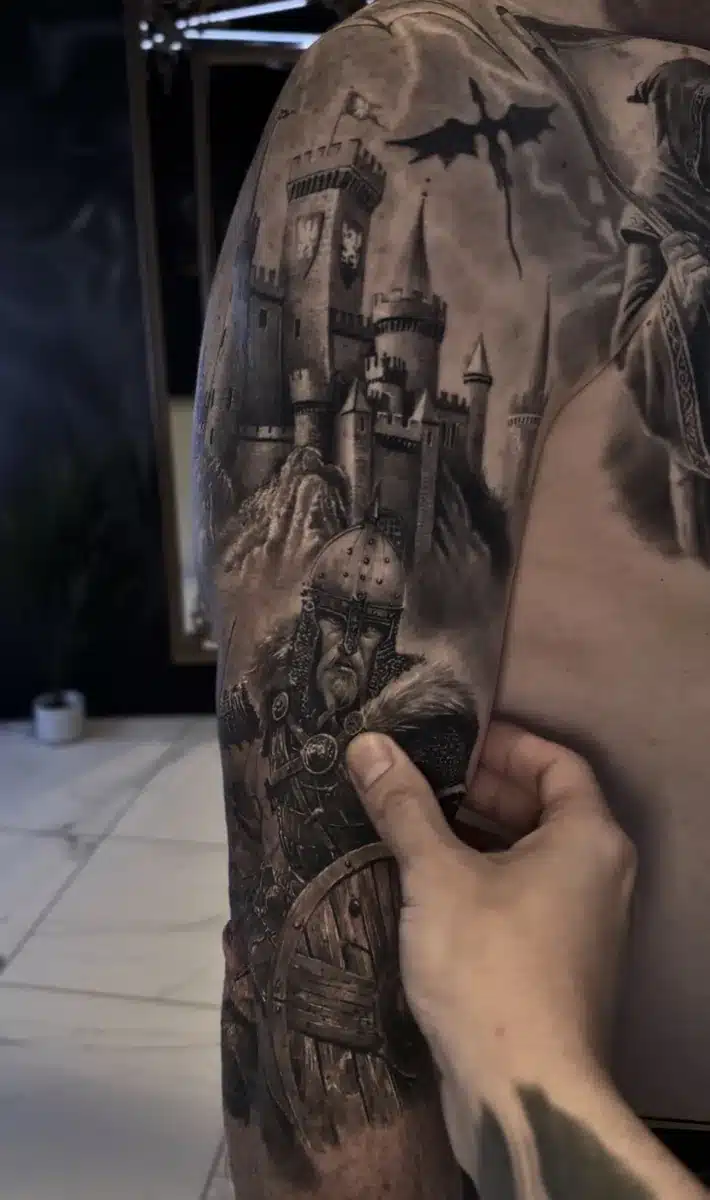
Contrast: the secret behind good black and grey tattoo aging
If I could explain black and grey realism with one word, it would be contrast. Contrast is the difference between the darkest dark and the lightest light.
When a tattoo has strong contrast, your eye reads it easily, even from far away. Over time, all tones move a little closer together. So if the tattoo starts with a small range of greys, it can turn flat. But if it starts with deep blacks and clean skin highlights, it keeps its shape for much longer.
This is why I protect the highlights in every piece. Often, the most important part of a realistic tattoo is the skin I leave untouched. I explain this idea more in my article about how artists create depth using only black and grey.
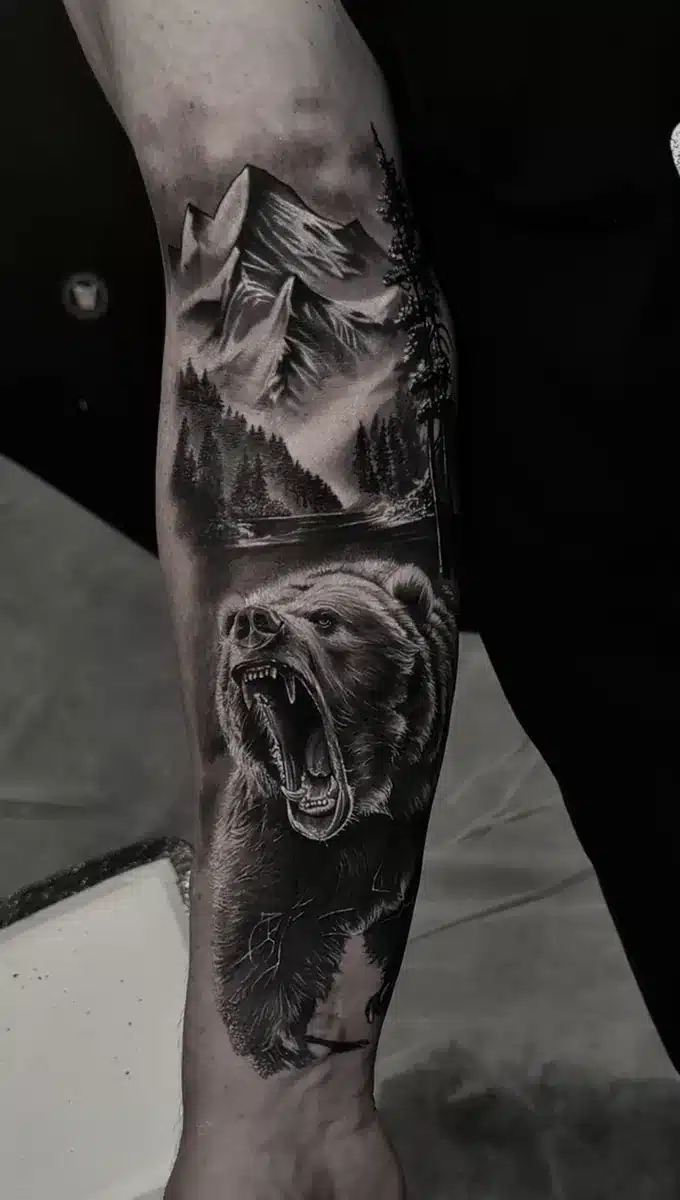
Size and detail: why small realism ages badly
Here is something many people don’t want to hear. Very small realistic tattoos often age badly. The reason is simple. Fine details need space.
Imagine a face the size of a coin. The eyes, the nose and the shadows sit very close together. Over the years, the ink spreads a tiny amount. As a result, those details start to touch and blur. In contrast, the same face at a bigger size has room for each detail to stay separate.
So if you love detail, give it space. A good artist will tell you honestly when an idea is too small for realism.
Placement and black and grey tattoo aging
Placement also changes how a tattoo ages. Some areas get more sun, more friction or more movement. For example, hands, fingers and feet often fade faster because they rub against things all day.
On the other hand, areas like the upper arm, the calf, the back and the thigh usually hold realism well. They have more stable skin and more space. You can read more about this in my guide on tattoo positioning and anatomy.
Technique: how the artist affects aging
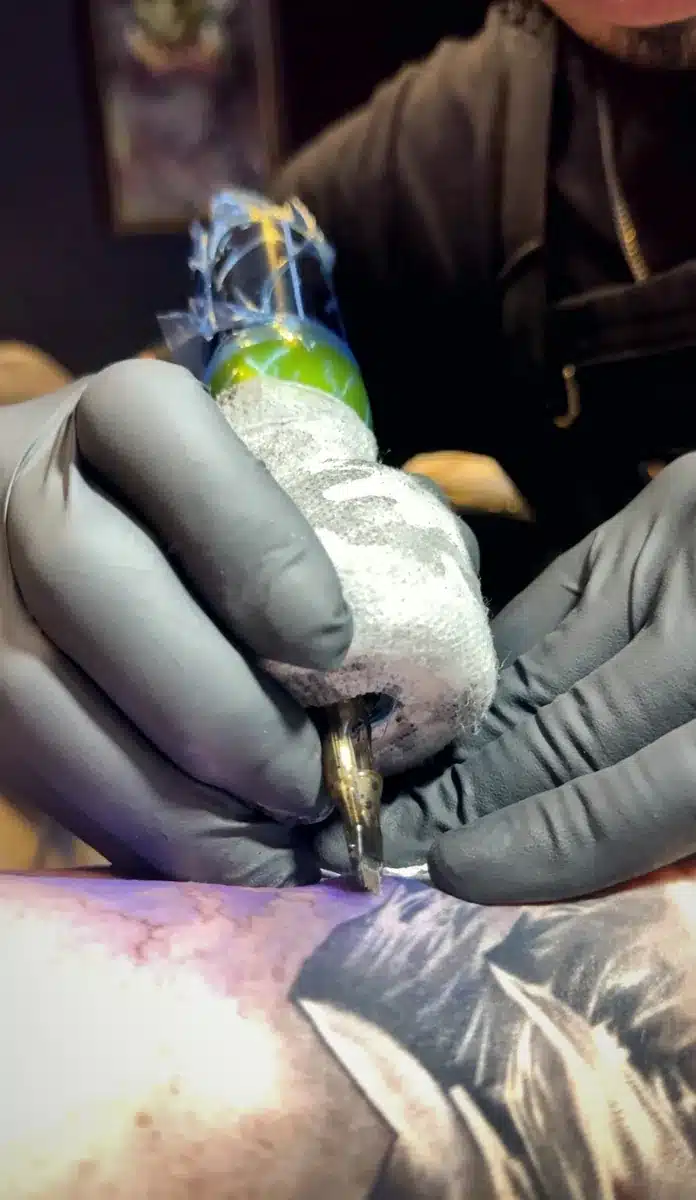
Technique matters as much as design. Every artist has a different way of putting ink into the skin. Some work too shallow, and the tattoo fades fast. Others work too deep, and the ink spreads, which we call a blowout.
In realism, the goal is smooth, even shading at the right depth. That takes years of practice. It also takes patience, because building rich blacks often needs several passes and, sometimes, several sessions. I wrote more about this in my article on why some tattoos fade more than others.
Sun: the biggest enemy of your tattoo
Of all the things that affect black and grey tattoo aging, sun is the one you control the most. UV light breaks down pigment over time. And in Sydney, the sun is strong almost all year.
So protect your tattoo like you protect your skin. Sun care is the cheapest way to slow black and grey tattoo aging. Once it fully heals, use sunscreen when you are outside. Cover it with clothing on long days at the beach. Cancer Council Australia explains how the UV index works, which helps you know when protection matters most.
Aftercare and daily habits
Good aftercare gives your tattoo the best start, and it shapes black and grey tattoo aging from the very first week. During healing, keep it clean, follow your artist’s instructions and don’t pick at the skin. After healing, keep your skin hydrated. Hydrated skin simply looks better, and so does the ink in it.
For more detail, read my guide on keeping a black and grey realism tattoo hydrated. It explains why dry skin can make a tattoo look dull.
Signs of healthy black and grey tattoo aging
So how do you know if your tattoo is aging well? Look at it in natural light and check a few simple things:
- The darkest areas still feel deep. They should not look blue or washed out.
- Highlights stay clean. Bright areas should still show your natural skin tone.
- The main subject reads from far away. Step back two metres. Can you still see the face, the animal or the shape?
- Edges look soft but clear. Some softening is normal. Big blurry patches are not.
If your tattoo passes these checks, you are seeing healthy black and grey tattoo aging. If not, talk to your artist. Sometimes a small adjustment can bring contrast back.
The emotional side of watching a tattoo age
There is also a feeling part to this. When a tattoo is new, you look at it all the time. You check it in the mirror, you take photos, you show friends. Then life gets busy, and you look at it less.
One day, you notice it again. That moment can bring a small fear: “Has it changed?” Usually, it has changed a little, just like you have. But a well planned tattoo still feels like yours. Many clients tell me their tattoo feels even more personal after a few years, because it now carries memories of the time since they got it.
What I can and cannot promise
I want to be honest with you. No artist can promise how a tattoo will look in ten years. Skin, sun, age, health and lifestyle are different for everyone.
However, I can promise how I work. Strong contrast comes first. Detail always gets enough space. Placement and flow guide every design. And real healed results are always part of what I share, so you can judge for yourself. My goal is a tattoo that looks impressive today and keeps looking strong for years.
FAQ about black and grey tattoo aging
Not necessarily. Black pigment is very stable. With good contrast and sun protection, black and grey realism can age very well.
The surface usually heals in a few weeks. Deeper healing takes longer. Your tattoo may keep settling for a couple of months.
Sometimes a touch-up can refresh contrast. Each case needs an assessment first, and touch-ups are not automatically free.
Protect it from the sun, keep your skin hydrated and choose an artist who builds strong contrast from the start.
A tattoo built to last
Black and grey tattoo aging is not something to fear when you understand it. It is something to plan for. So choose strong contrast, enough size, smart placement and an artist who shows healed work.
If you want to see more of my work, visit my portfolio. And if you have a healed tattoo you are worried about, tell me about it in the comments. I read every one.
Washington